
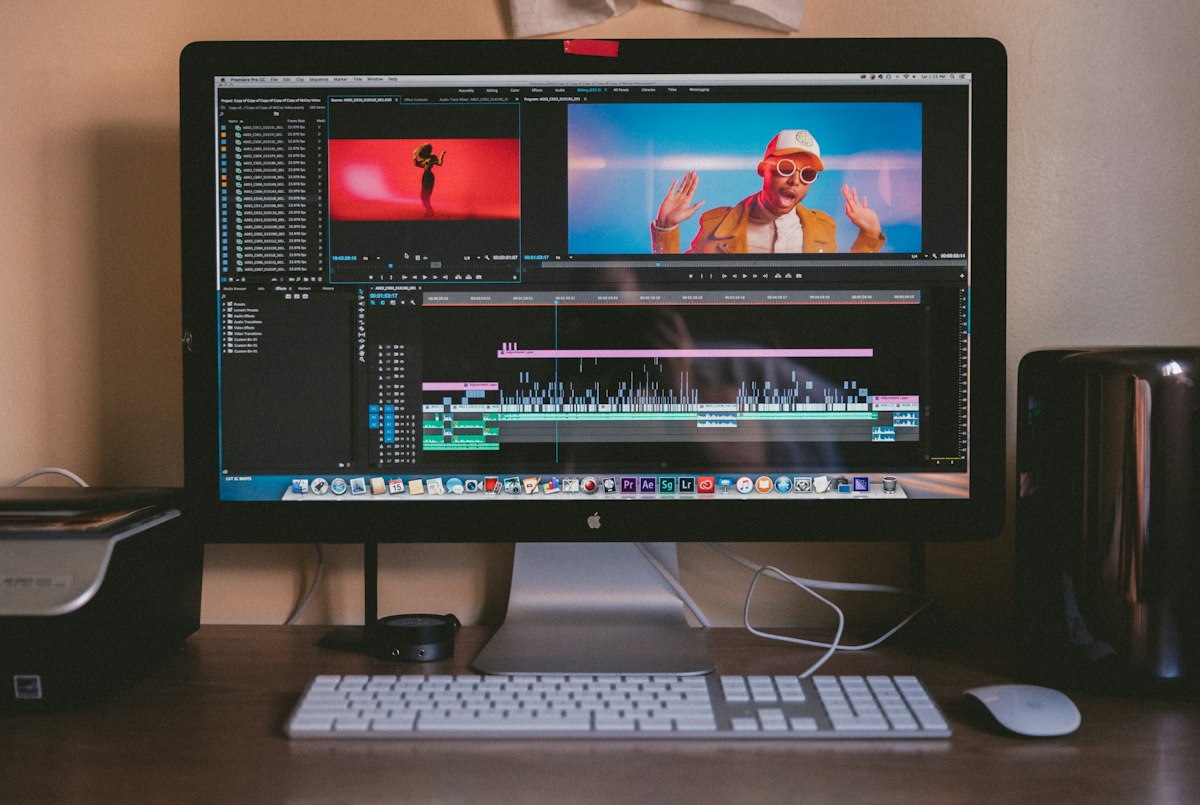
Can Claude AI Replace Video Editors? Complete Comparison
I compared a Claude directed edit against a human editor working on the same raw footage to answer this honestly instead of theoretically. The result was closer than I expected in one direction and further apart than I expected in another.

Marcus Webb
July 13, 2026
Test setup: same twenty minute raw talking head recording, edited two ways. One version cut by a professional freelance editor with five years of experience, the other planned by Claude and executed through a connected footage tool with no manual editing skill involved on my part. Both were judged blind by three people unfamiliar with which was which.
1. Introduction
This question gets asked constantly by people worried about their jobs and by people hoping to skip hiring one, and most answers are theoretical rather than tested. I ran an actual side by side comparison on identical footage to get past the theory and into a real result.
2. The Problem: The Answer Depends Entirely On The Type Of Video
A single comparison cannot answer this question for every category of video work, since a simple talking head cut and a heavily stylized narrative short film are almost entirely different skill sets. This test focused specifically on straightforward talking head and interview style content, which is the category where AI assisted workflows currently have the strongest claim.
3. Causes and Fixes: Where Each Version Won
- Pacing and structural cuts: the two versions were rated nearly identical by blind reviewers, both removed filler words and tightened dead air effectively, this is Claude's strongest area
- Emotional timing on pauses: the human editor kept a couple of meaningful pauses that Claude's cut list removed as dead air, small but noticeable difference in the final feel
- Turnaround speed: the Claude directed version was ready in under fifteen minutes total, the human editor's version took roughly four hours across a full day turnaround
- Cost: the Claude directed version cost a small handful of connector credits, the human editor charged a standard freelance day rate for the same footage
- Creative flourishes: the human editor added a subtle music sync and a stylistic transition neither Claude nor the connector suggested, this was the single clearest quality gap in the human editor's favor
4. Examples: What The Blind Reviewers Actually Said
Two of three reviewers could not confidently identify which cut was AI directed and which was human edited on pacing alone. All three correctly identified the human edited version once asked specifically about musical timing and transition choices, which were the most obvious tells. For a straightforward informational video without heavy stylistic requirements, the practical difference in final output quality was smaller than expected going into the test.
5. Common Mistakes
- Assuming this result generalizes to every video category, complex narrative editing, multicam work, and heavily branded stylistic projects were not tested here and likely favor a human editor by a wider margin
- Treating a fast turnaround as automatically equal to good judgment, speed and quality are separate axes and this test measured both rather than assuming one implies the other
- Skipping a human review pass entirely just because the AI directed version tested well, spot checking still caught two minor timing issues before final export
- Assuming cost savings alone justify replacing an editor without considering the creative ceiling a skilled human brings to more ambitious projects
6. Best Practices
For high volume, straightforward content like talking head videos, tutorials, and interviews, a Claude directed workflow is genuinely competitive on quality and dramatically faster and cheaper. For anything requiring strong creative direction, stylistic flourishes, or complex multicam and narrative work, a skilled human editor remains ahead, and the gap widens with project complexity. Many working editors are now using Claude for the rough cut stage specifically, then applying their own creative judgment on top rather than starting from scratch, which captures the speed benefit without losing the creative ceiling.
7. FAQ
- Should video editors be worried about their jobs: the routine, high volume rough cut work is genuinely at risk of automation, complex creative editing is not there yet based on this test
- Is a Claude directed edit good enough for a client facing final deliverable: for simple content, often yes, for anything brand sensitive or creatively ambitious, treat it as a strong starting point rather than a final product
- Does this comparison apply to short form social content too: likely yes for straightforward cuts, though highly stylized short form editing with heavy motion graphics was not part of this specific test
- What is the realistic near term outcome for the profession: a shift toward editors using AI for the mechanical first pass and spending more of their time on the creative decisions that still require a human eye
8. Conclusion
Claude does not replace a skilled human editor across the board, but for straightforward content it gets closer than I expected, close enough that the honest answer depends entirely on what kind of video you are making. The realistic outcome for most working editors right now looks less like replacement and more like a shifted workload, with the mechanical first pass increasingly handled by AI and the creative judgment still firmly human.